


p>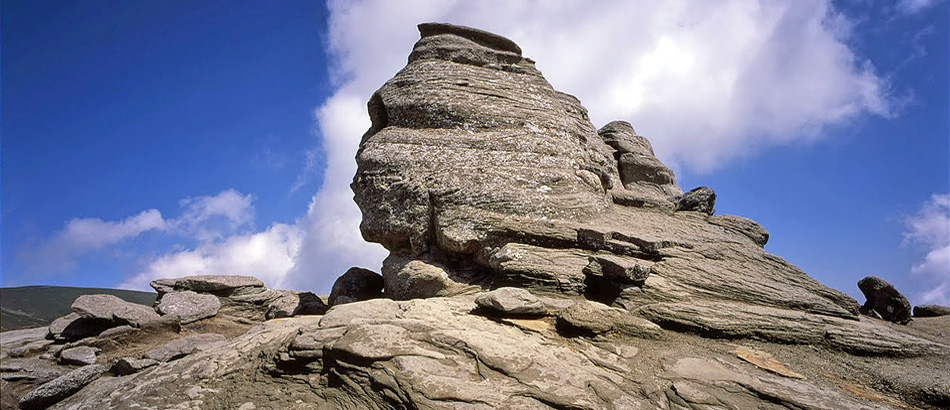
Romania, a Spiritual Bridge between Asia and America
The spirit of the people, together with the history and traditions of the lands we will visit, creates a unique and authentic Romanian experience. We will enjoy remarkable landscapes and historical vestiges, and discover places that feel energetically alive — portals, or “star gates,” into other dimensions. Romania’s history reaches beyond time and space, where sacred sites, new discoveries, vast tunnel systems, and rich traditions of Immortals and Magical Inner Beings merge into a new paradigm of truth.
Bucharest – Bucegi Mountains – Apuseni Mountains – Sarmizegetusa Citadel, home of Zalmoxis, the Vanishing God: “Secret Enclave in the Apuseni Mountains”
The American archaeologist William Schiller and Doctor Daniel Ruzo, a Peruvian explorer, found clues linking megalithic structures with hidden messages of the Masma Culture. They claim that civilization on this planet began in the Carpathians.
Their arguments rest on ten discoveries in Romania that are unique on the planet: the Tartaria Tablets and other ancient writings (dated to 5500 BC, arguably the earliest form of writing, before the Sumerian or Egyptian scripts), found on Carpatho-Danubian territory; the oldest human skeleton established through indirect methods; the oldest metal furnace (6000 BC); ancient gold mines; underground tunnels in places of very strong energy; sacred temples and caves. Some of these sites can be visited on this initiatory journey (the Sphinx of the Bucegi Plateau, the Șinca Veche Cave, and others).
According to Ruzo, another human race existed in proto-history, before our civilization. They were highly advanced, able to travel worldwide, and left evidence of themselves in many places — such as the Sphinx in the Carpathian Mountains and Markawasi, Monument of Humanity, in the Andes. These two megalithic structures are almost identical, despite the distance between Europe and South America. This agrees with Hopi traditions suggesting we are not the first humanity to reach a high degree of sophistication, but probably the fourth or fifth.
On this journey you will learn about the Dacians, the people of ancient times known as the Immortal Ones — a remarkable history you will discover step by step. The Thracian tribes were great throughout antiquity, known for their physical endurance, traditional medicine, and an ancient language that may predate Sanskrit. The Dacians are part of the Thracians, and according to Herodotus they were the second most numerous people in the ancient world. Some Thracian gods, such as Dionysus, Bendis and Asclepius, were later worshipped by the Greeks and Romans.
Through our journey we will explore the sacred spaces of Transylvania and an important part of the Apuseni Mountains. The red spots on the Fibonacci Spiral represent centres of power — Earth vortexes, chakra points of living Gaia, or a congruence of planetary ley lines. As we will see, many of these fall in Romania.
This tour is a chance to weigh historic fact against the legends that surround some of Romania’s most discussed places. We begin with royal life at Peleș Castle in Sinaia, the mountain resort at the foot of the Bucegi Mountains. We then compare that more recent royal world with Alba Iulia, where the three main Romanian lands united in 1600 for the first time in many centuries under Michael the Brave — a town that remains a symbol of unity, still holding a glorious medieval air.
Midway we shift from history to ancient legend: the megaliths of the Bucegi Mountains, such as the Sphinx and Babele (the Old Ladies’ Rocks), and finally Sarmizegetusa Regia, the religious and political centre of our forefathers, the Dacians. The complex bears signs of a highly advanced civilization, with Zalmoxis, the vanishing god, as its pivotal figure. Zalmoxis returned to these places with gifts of wealth and wisdom. The kings of this territory acted in accordance with his visions, and during his time the Dacians reached their most flourishing development in art, construction, religion, medicine and government, grounded in the harmonious laws of the Universe.
We encourage you to study the facts, analyse the scientific data, explore the legends, feel these places in your heart, see how they correlate, and draw your own conclusions.
We are pleased to invite you to a unique experience in Romania.
Itinerary – Short Version
Day 1 / Saturday – Bucharest, Gathering Day
Arrival in Bucharest at Henri Coandă Airport. Accommodation at a 3/4* hotel (B&B) in the city often called Little Paris. Bucharest tour. Welcome dinner.
Day 2 / Sunday – Peleș Castle and the Bucegi Mountains

Optionally, we end the day at Ialomița Cave, a remarkable space that still holds the energy of the monks and saints who prayed and lived inside this mountain.
Accommodation at a 4* hotel in the Bucegi Mountains, in the heart of nature. HB.
Day 3 / Monday – Babele and the Sphinx of Bucegi
After breakfast (9:00) we take the cable gondola to Babele (the Old Ladies’ Rocks), then a short walk to the Sphinx of Bucegi, an impressive megalithic structure.

Accommodation at the same 3/4* mountain hotel. HB.
Day 4 / Tuesday – Șinca Veche and Sighișoara
After breakfast (9:00), departure to Șinca Veche Cave, the sacred Temple of Fates — an energy vortex filled with the presence of the divine feminine. Visit the medieval town of Sighișoara, with its squares, colourful houses that recall the Saxon influence of the area, and cobbled streets that invite exploration. Free time for lunch.


Accommodation at a 4* Szekler manor, near Szekler’s Rock, a spectacular formation in the Trascău Mountains. HB.
Day 5 / Wednesday – Turda Salt Mine
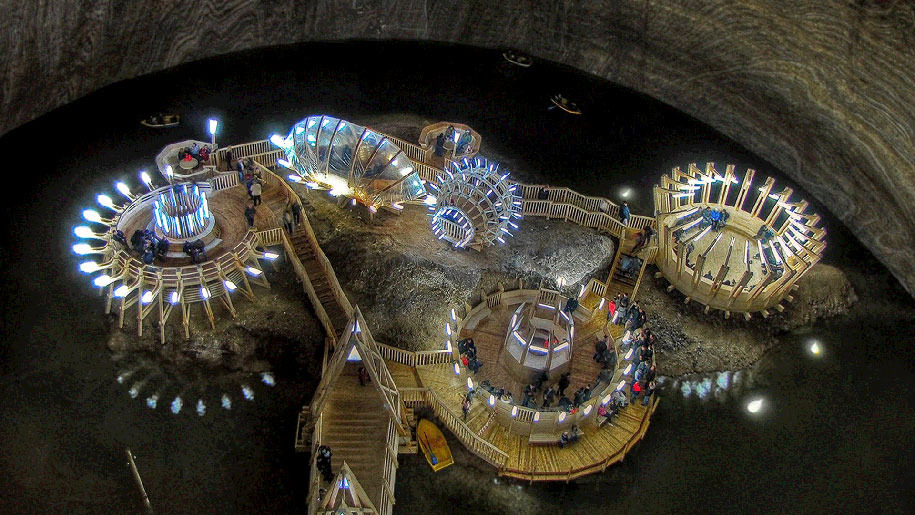
After breakfast (9:00), visit the Turda Salt Mine and, optionally, the Turda Gorge.
The salt mine has drawn the attention of CNN and National Geographic for its scale and design — a proof of human ingenuity, set beside the superb landscape of the Turda Gorge.
Accommodation at the same manor. HB.
Day 6 / Thursday – Sarmizegetusa Regia
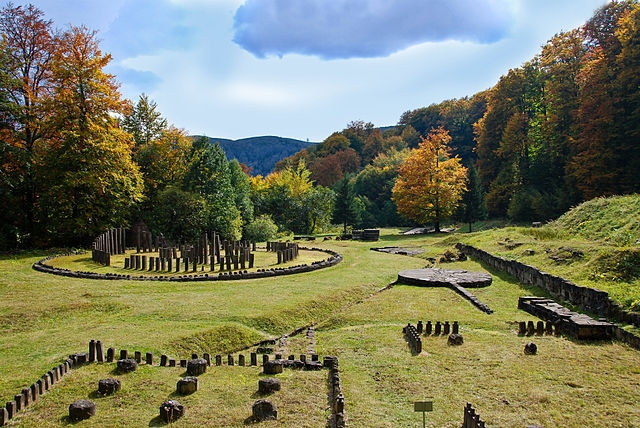
After breakfast (9:00), visit the Dacian fortress of Sarmizegetusa Regia and the Costești Fortress, capital of the ancient Dacian civilization. Here we learn about the people known as the Immortal Ones and their connection to some of the oldest civilizations on this planet.

Accommodation at a comfortable and nice 3* guesthouse. HB.
Day 7 / Friday – Return to Bucharest
Arrival in Bucharest. Accommodation at a 3/4* hotel in the old city centre. Farewell dinner. HB.
Day 8 / Saturday – Departure
Transfer to Henri Coandă Airport.
Price
The price of the journey is 935 € per person in a double room.
The single supplement is 450 €.
The journey includes:
- 7 nights’ accommodation, HB (breakfast and lunch or dinner)
- Welcome and farewell dinners
- Transport by minibus in Transylvania
- Airport transfers
- Local guide
- Translator
- Entrance fees at the tourist sites
The journey does not include:
- Health insurance
- Personal expenses and tips
A 50% advance payment is required at registration.
Itinerary – Long Version
Day 1 / Saturday – Bucharest, Gathering Day
Arrival in Bucharest at Henri Coandă Airport. Accommodation at a 4* hotel (B&B) in the city often called Little Paris. Welcome dinner, a chance to get acquainted and to taste Romanian people, customs and cuisine.
Day 2 / Sunday – Sinaia, Peleș Castle and Ialomița Cave
After breakfast (8:00) we depart for the Bucegi Mountains. We stop in Sinaia, the famous mountain resort and Pearl of Prahova Valley. At the foot of the Bucegi Mountains stands Peleș Castle, the former summer residence of King Carol I. An architectural gem in Swiss-chalet style, it was built and decorated between 1873 and 1914 and was the first electrified castle in Europe. The interiors are charming: glassware, clocks, silver, oriental carpets, tapestries and exceptional stained glass give the halls their royal character. Peleș is surrounded by seven terraces decorated with statues by the Italian artist Romanelli, fountains, ornamental vases and Carrara marble.
Lunch is served in Sinaia, at the castle restaurant.
We continue up the mountain to the hotel and visit Ialomița Cave, a 15-minute walk away. What makes this place special is its spiritual quality: hermits and monks came here to undergo severe tests on the path to communion with the Divine. Some report visions during meditation — young women traditionally called Iele, with eyes sparkling with magical power, singing, dancing and whirling in a dream-like atmosphere. Others have seen luminous shapes or captured orbs on camera. It is a place where revelations can occur, adding to the magic of the Bucegi plateau.
Accommodation at a 4* hotel in the heart of nature. HB.
Day 3 / Monday – The Sphinx and Babele
After breakfast we take the cable gondola up to the megalithic structures on the Bucegi plateau. The most famous is the Romanian Sphinx, a giant human head said to have been shaped over a long period by wind erosion. Its size and mystic character have led to comparisons with the Sphinx of Egypt. The balanced proportions of the face, the severe lips and strong chin, express power and sovereignty — an ancient deity still stirring the present. Some even claim the Egyptian megalith is a copy of the Romanian one. Rumour has it that vast tunnel systems link these structures, though scientists remain cautious and have yet to issue a verdict on their purpose. Several hypotheses, and several books, have kept the curiosity alive.
Nearby stands another strange group of rocks, Babele (the Old Ladies’ Rocks), thought to have been formed in the same way, as wind eroded the limestone and sandstone. They resemble huge mushrooms. Popular tradition links them with shepherdesses turned to stone after being caught in a snowstorm with their sheep at the turn of spring. These structures on the Bucegi Plateau are not the only ones of their kind in Romania; similar forms appear on other mysterious plateaus, valleys and mountains.
Accommodation at the same 4* mountain hotel. FB.
Day 4 / Tuesday – Șinca Veche and Sighișoara
Departure to Șinca Veche, the sacred Temple of Fates. We visit the cave monastery, an ancient place of worship perfectly set into the natural landscape and thought to be a pre-Christian settlement. People come here to meditate and pray for the fulfilment of their wishes, or simply to step into a space that seems suspended in time, where paranormal phenomena have been reported.
We stop for lunch in the small medieval town of Sighișoara, a magnificent 12th-century Saxon citadel on the UNESCO World Heritage List since 1999. It is often considered the most beautiful and best-preserved inhabited citadel in Europe, with authentic medieval architecture and many sites, including:
- The guild towers, the landmark being the Clock Tower, 64 m high, built in the 13th century and today a history museum
- The Covered Staircase — an old wooden-roofed stair leading to the Church on the Hill, a Lutheran church from the 14th century
- A 15th-century Greek-Catholic church, the Virgin Mary church of the Dominican monastery (17th century), and an 18th-century Orthodox church dedicated to the Virgin Mary
Accommodation at a 4* manor near Szekler’s Rock, in the Trascău Mountains. HB.
Day 5 / Wednesday – Turda Salt Mine and Turda Gorge
Visit the Turda Salt Mine and the Turda Gorge. The mine is attested in an official document from 1271. The engineering of the galleries against the mineral background offers a spectacular view.
Optionally, if the weather is good, we can take a one-hour hike of medium difficulty through the Turda Gorge. The gorge stretches about 1,300 m in length and 200 m in height. Formed as the Hășdate River eroded the limestone, it is a landscape of high cliffs, sharp ridges, stone towers, arches and caves. As a mixed reservation it holds over 1,000 species of plants, animals and butterflies. We will have a picnic lunch in this glade.
Accommodation at the same manor. HB.
Day 6 / Thursday – Sarmizegetusa Regia
After breakfast we depart for Sarmizegetusa, the most important religious and political centre of the Dacians, the ancient people of this territory.
In Sanskrit the name Sarmisegetusa is said to mean flow, enlightenment, and the place that illuminates the world of life. We will explore architectural wonders such as the 365.242197-day calendar, the solar disc, the colonnade, and much more.
Accommodation at a comfortable guesthouse. HB.
Day 7 / Friday – Return to Bucharest
Departure to Bucharest. Accommodation at a 4* hotel in the old city centre (FB). Farewell dinner. We reach the end of our Romanian adventure.
On this last evening together we will share our experiences, exchange impressions, and hopefully make plans for the next trip in this beautiful country.
Day 8 / Saturday – Departure
Free morning and departure day. Transfer to Henri Coandă Airport.
